Luxury Watch Authentication: Why Visual Inspection Is Dead and How Cryptography Solves It
Why 1:1 super-clones defeat visual appraisal, how secure elements prove a watch is genuine in one tap, and how Cifr protects provenance and resale value.
Cifr Team · · 13 min read
Luxury watch authentication is the process of proving a timepiece is genuine and establishing who has owned and serviced it. Traditionally this meant a specialist with a loupe, a set of scales, a paper certificate and, often, an opened case back. That method now fails, because the best counterfeits match a genuine watch to the milligram. Hardware cryptography replaces subjective judgement with mathematical proof.
How modern luxury watch authentication works:
- A secure element is bound to the piece. A tamper-resistant chip is fitted to the watch and its authentication card, not printed on a label.
- The private key never leaves the chip. It is generated on-chip and is non-exportable, so there is nothing to copy, photograph or intercept.
- Every tap is a fresh challenge and response. The phone sends a random challenge; the chip returns a signature unique to that tap. Replaying an old scan proves nothing.
- The result is a complete, immutable record. Manufacture origin, caliber specification, every service sign-off and every ownership transfer, verified in a sub-second tap.
[Visual · Hero] Cifr tap-to-verify — a phone tapping a Jacob & Co. authentication card and returning a verified result on screen.
The rise of 1:1 super-clones and the “doubt discount”
For most of the industry’s history, authentication rested on a reasonable assumption: a counterfeit is worse made than the original, so a trained eye will catch it. That assumption no longer holds.
What a modern super-clone actually replicates
The counterfeit market has industrialised. A high-end replica today is not a market-stall fake with a misaligned logo. Contemporary clones reproduce:
- Case metallurgy and CNC machining — correct alloys, correct lug geometry, correct finishing transitions between brushed and polished surfaces.
- Weight distribution to the milligram — the single check most buyers were taught to trust.
- Dial typography and printing — including the font weights, kerning and lume application that once gave fakes away under a loupe.
- Movement decoration — Côtes de Genève, perlage and even engraved bridges on a clone caliber.
As Cifr’s luxury watch platform puts it: a replica can copy the case to the milligram. It cannot produce the private key.
Why opening the case back is not the answer
The specialist’s fallback — removing the case back to inspect the movement — carries real costs. It compromises water-resistance gaskets, can void a manufacture warranty, risks scratching the case and lugs, and introduces human error. It is also slow and expensive, and it still returns an opinion rather than a proof. For a sealed high-complication piece, it may not be a realistic option at all.
Worse, it does not reliably catch the hardest category of fake: the Frankenwatch, an authentic case and dial married to a cloned or non-original escapement, or a genuine movement in an aftermarket case. The parts pass inspection individually. The watch as a whole is not what it claims to be.
The economic toll: the doubt discount
Because provenance is paper-based, the secondary market prices in uncertainty. A pre-owned timepiece whose history cannot be independently verified typically trades below comparable pieces with complete, trusted documentation — a spread commonly cited in the region of 15–30% of fair value depending on reference, rarity and how much of the original paperwork survives.
That discount is not a reflection of the watch. It is the market charging for risk it cannot price any other way. Cryptographic verification removes the risk, and with it the discount: when any buyer can confirm authenticity and history in seconds, a verified piece never has to trade at a doubt discount.
The anatomy of the failure: why paper certificates and QR codes no longer protect you
Four distinct weaknesses sit underneath the current system.
1. Paper certificates of origin are trivially reproduced. Certificates are printed documents. Printed documents can be reprinted, aged, and matched to a cloned serial. A certificate proves someone had a printer, not that a watch is genuine.
2. QR warranty cards are clonable by design. A QR code is a picture of a URL. Anyone who can photograph it can reproduce it perfectly, and a counterfeiter can point their copy at a spoofed mirror domain that returns a convincing “Authentic” screen. The code carries no secret, so it cannot prove anything about the object it is attached to.
3. Visual matching cannot resolve hybrids. Component-level inspection struggles with Frankenwatches, where authentic and inauthentic parts are combined. There is no single component that fails the test.
4. Ownership history is hearsay. A folder of receipts, service invoices and a bill of sale is a chain of custody held together by trust in whoever assembled it. Any link can be fabricated, and a broken chain is indistinguishable from a dishonest one.
[Visual · Diagram] The market today vs. with Cifr — forgeable paper certificates and clonable QR warranty cards on one side; secure element bound to the piece, private key that never leaves the chip, and challenge-and-response unique per tap on the other.
The new standard: hardware secure elements and challenge–response verification
Cifr replaces the printed claim with a cryptographic one. Three properties do the work.
The secure element
A secure element is a tamper-resistant microchip designed to hold cryptographic material and resist physical attack — the same class of hardware that protects payment cards and passports. In a watch deployment it is bound to the timepiece and to its physical authentication card, so the chip and the object cannot be separated without evidence.
The non-exportable private key
Each chip generates an asymmetric key pair on-chip at manufacture. The public key can be published freely. The private key is non-exportable: there is no command, interface or firmware path that reads it out. It never appears in a database, never crosses a network, and never exists in a form that can be leaked or copied.
This is the structural difference from every serial number, QR code and static NFC tag. Those systems store an identifier that must be shown in order to be checked, which means it can be observed and reproduced. A secure element proves it holds a secret without ever revealing the secret.
Challenge and response: why a copied chip fails instantly
Verification is a live cryptographic conversation, not a lookup:
- The phone generates a random challenge — a fresh, unpredictable number for this tap alone.
- The chip signs that challenge with its non-exportable private key.
- The signature is checked against the public key registered to that piece.
Because the challenge is different every time, the response is different every time. That defeats the two attacks that break conventional systems. Replay fails: a captured signature is valid only for the challenge it answered, so a screenshot or recorded scan is worthless. Cloning fails: copying the chip’s readable data copies the public key and the identifier, but not the private key — so the clone cannot sign a new challenge and is rejected on the first tap.
One tap, sub-second
Verification uses the NFC radio already in the owner’s phone, so the interaction is a tap against the card or the piece and a result in under a second — no dedicated reader, no appointment, no case opening. For buyers inspecting a watch across a table, that speed is what makes verification something that actually happens at the point of sale.
[UI Mockup] The Jacob & Co. authentication card in-app — Caliber Blueprint, Manufacture Genesis Record, Certified Service History and VIP allocations.
The complete digital passport: what lives inside the Genesis Record
Authentication is the entry point, not the product. Once a piece can prove its own identity, it can carry a verified record for life. Cifr’s watch passport is built from six modules.
- Caliber Blueprint — the exact movement specification for this piece, matched to the manufacture record, so a swapped or cloned caliber is visible immediately.
- Manufacture Genesis Record — a permanent cryptographic link from the atelier in Geneva through to boutique delivery. The watch’s origin is signed at the point it is made, not asserted later.
- Certified Service History — every master watchmaker sign-off, pressure check and replaced part, in order and immutable. Service becomes an asset rather than a folder of receipts.
- Ownership History — each transfer signed by the chip, producing provenance no paper trail can fake and no dispute can unpick.
- VIP Concierge & Allocations — tap-gated access to private viewings and priority allocations, where the physical piece is the credential.
- Manufacture Event Access — entry to atelier visits, launches and owner-only dinners, unlocked by the watch itself.
The Stolen Watch Registry and Global Radar
Because every verification is a signed, located event, theft becomes visible. An owner can flag a piece as stolen, which locks its passport. From that moment, any tap anywhere in the network is a signal: an unauthorised tap at a secondary dealer in Dubai raises a location flag; a passport presented at a London auction house is locked and an alert is served to the house; a legitimate service check-in at a boutique in Tokyo is signed and recorded; an owner tap in a Geneva vault verifies normally.
A static serial database tells a dealer a watch was reported stolen only if the dealer thinks to check. A locked cryptographic passport tells the network the moment someone tries to verify it.
[Dashboard] Stolen Watch Registry & Global Radar — live alert log with an unauthorised tap flagged at a secondary dealer and a passport locked at an auction house.
For collectors and private buyers
If you buy, sell or inherit timepieces, cryptographic verification changes four things.
- Proof it is genuine. One tap confirms the piece against its secure chip — no paperwork, no appraisal, no case opening, no waiting on a specialist’s diary.
- Full history in one place. The caliber and complication record, every ownership transfer and every service entry, in one verified timeline that cannot be edited after the fact.
- Protected resale value. Any buyer verifies in seconds, so a verified piece never trades at a doubt discount. The record travels with the watch, not with the folder you might lose.
- Access only owners get. The physical tap unlocks allocations, private viewings and direct concierge — utility that a certificate in a drawer cannot provide.
How to authenticate a luxury watch today
Until cryptographic passports are universal, combine the two approaches:
- Tap first, if the piece supports it. A secure-element verification is the only check that cannot be defeated by a better-made fake. It is also the fastest.
- Verify the paperwork against the manufacture, not against itself. A certificate that only confirms its own contents proves nothing.
- Treat a missing or partial service history as a pricing factor, not a detail — it is precisely what the doubt discount is charging for.
- Be sceptical of component-level reassurance. Individually correct parts do not rule out a Frankenwatch.
- Check the piece against a stolen watch registry before money moves, not after.
For brands, manufactures and secondary retailers
For the maisons and the dealers, the same hardware addresses four commercial problems at once.
- Super-clones stop working. A replica can copy the case to the milligram. It cannot produce the private key — so the clone fails the only check that matters, in public, on the buyer’s own phone.
- A direct line to every owner. The piece stays connected through resale, so the second owner is still your client. The relationship no longer ends at the first sale, which is where most of a watch’s life and most of its transactions actually occur.
- Service and warranty, automated. Workshops check in a piece by tapping it and the ledger updates itself — no manual warranty administration, and an auditable record of every intervention.
- See where pieces surface. Every tap is a signal, so grey-market movement and theft become visible in a way that serial-number spreadsheets never allowed.
Case study: Jacob & Co.
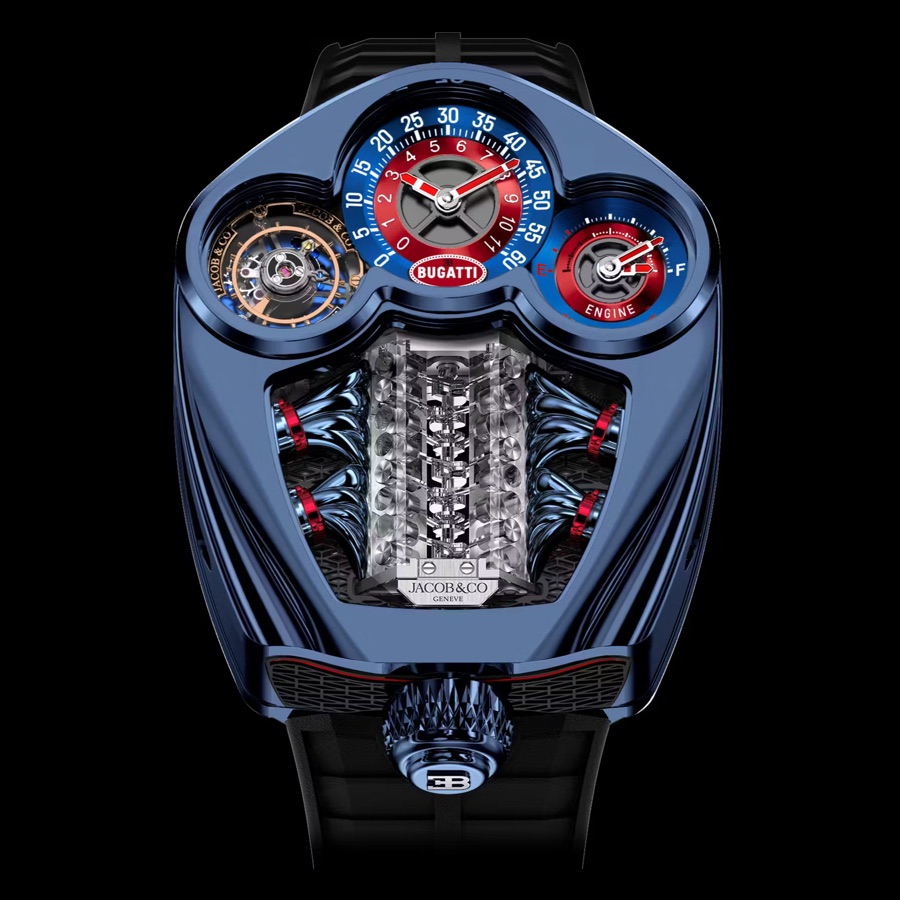
Jacob & Co. Genève pairs each high-complication timepiece with a Cifr-secured authentication card, giving every owner instant, cryptographic proof from atelier to wrist. On pieces such as the Bugatti Chiron Tourbillon — where the movement is the value and the case is sealed — a tap replaces an inspection that would otherwise mean opening a watch that should never be opened casually.
The deployment covers the full passport: Caliber Blueprint against the manufacture record, Genesis Record from Geneva to boutique, Certified Service History, signed ownership transfers, and tap-gated access to allocations and owner events.
Traditional appraisal vs. static QR vs. Cifr verification
| Feature | Traditional watch appraisal | Static QR code / NFC | Cifr cryptographic verification |
|---|---|---|---|
| Clone resistance | None — visual judgement only | Zero — the URL is copyable | Hardware secure element, non-exportable key |
| Verification speed | Days to weeks | ~2 seconds | Sub-second, one tap |
| Case integrity | Invasive — case back opened | Non-invasive | Non-invasive |
| Replay attacks | Not applicable | Succeed — the code is static | Fail — challenge is unique per tap |
| Detects Frankenwatches | Unreliable | No | Yes — caliber matched to manufacture record |
| Service ledger | Paper receipts, easily lost | Static web page | Immutable cryptographic audit trail |
| Ownership record | Hearsay — receipts and trust | None | Chip-signed transfers |
| Stolen watch recovery | Static serial databases | None | Global Radar, silent location flags, locked passports |
| Secondary resale | Subject to the doubt discount | Unverified | Full value preservation |
Frequently asked questions
Can a Cifr chip be cloned? Copying the chip’s readable data copies its public identifier but not its private key, which is generated on-chip and non-exportable. The clone cannot sign a fresh challenge, so it fails on the first tap.
Does a screenshot or recorded scan work? No. Each tap answers a new random challenge, so a captured response is valid only for the tap that produced it.
Do I need a special reader or app? No dedicated hardware. Verification runs over the NFC radio already in a modern smartphone.
What happens if the watch is stolen? The owner flags it and the passport locks. Any subsequent tap — at a dealer, an auction house or a boutique — flags its location and serves an alert.
Does this replace a watchmaker? No. It replaces the authentication guess, not the horology. A master watchmaker’s sign-off is one of the things the passport records immutably.
[Visual · Lifecycle] Complete provenance — Genesis at the atelier, every certified service, and each signed ownership transfer on one timeline.
Verify your next timepiece
Collectors and private buyers: if you are about to buy pre-owned, or you want your own collection to carry proof rather than paperwork, request a sample verification card and see what a tap returns.
Brands, manufactures and secondary dealers: to integrate Cifr into a manufacture line, a boutique inventory or a secondary-market intake process, schedule an enterprise demo. We will walk through chip integration, the passport modules and the Stolen Watch Global Radar against your own reference data.
Further reading: the rise of connected merchandise and the digital passport, and the Cifr chip range behind every verification.
Filed under
- luxury watches
- watch authentication
- Jacob & Co
- digital passport
- provenance
- anti-counterfeiting
- secure element