Why Serialisation Alone Does Not Stop Counterfeit Medicine
DSCSA and EU FMD made every pack serialised and checkable. Here is why falsified medicines still pass verification, and what closes the gap.
Cifr Team · · 6 min read
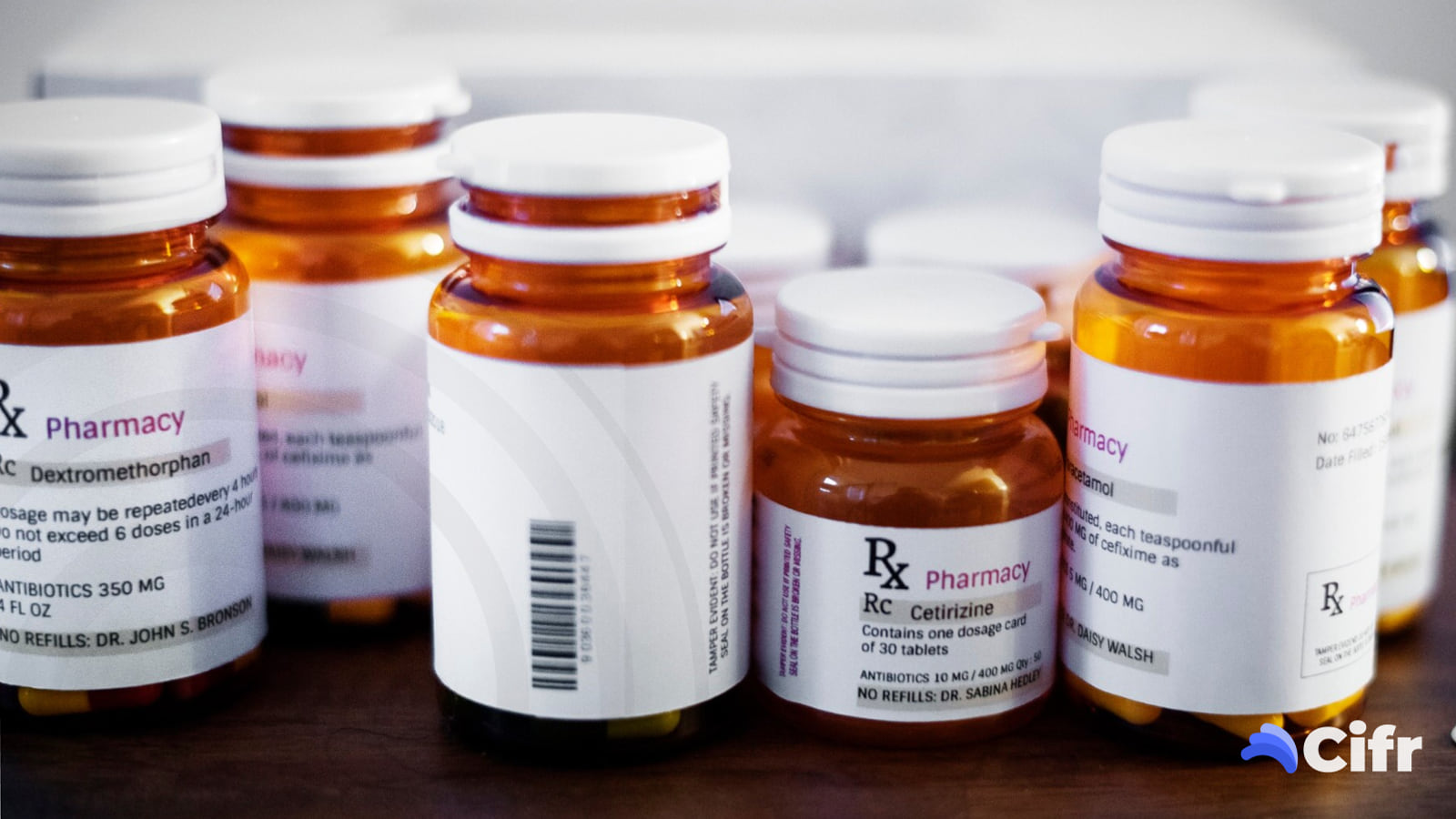
Serialisation gave every pack of medicine a unique number and a place to check it. Under the EU Falsified Medicines Directive, packs carry a unique identifier and tamper-evidence, and pharmacies decommission the identifier at dispense. Under the US Drug Supply Chain Security Act, trading partners exchange electronic transaction data at package level. Both systems work as designed.
Neither was built to answer the question a pharmacist actually has at the point of dispense: is this physical pack the one that number belongs to?
- What serialisation proves: that a given identifier exists, is in the right state, and has not already been dispensed.
- What it does not prove: that the carton in your hand is the carton that identifier was printed on.
- The gap: a printed 2D code can be copied perfectly onto a falsified pack and will verify as genuine until the real one is scanned.
- What closes it: a carrier that proves possession of a secret instead of displaying a number.
How a falsified pack passes a compliant check
The attack is not sophisticated, which is what makes it durable.
A 2D Data Matrix is a printed representation of data. Anyone who obtains one legitimate pack can reproduce its code at high fidelity and apply it to any number of falsified cartons. Each of those cartons will scan. Each will return a valid product code, batch and expiry. Each will verify against the national repository as an active, undispensed identifier — because the identifier genuinely is active and undispensed.
The system is designed to catch this, and it does, eventually: when two packs bearing the same identifier are presented, the second raises an alert. That is a detection mechanism, not a prevention one, and it has three practical weaknesses.
It is order-dependent. The falsified pack dispensed first verifies cleanly. The genuine pack presented second is the one that raises the alert, which inverts the investigation.
It only fires inside the system. Medicines bought outside the regulated chain — online pharmacies, grey imports, humanitarian supply — are never presented to a repository at all. That is precisely where falsified medicines concentrate.
It cannot see inside the carton. A pack can be genuine, correctly serialised and still refilled with substituted contents if the tamper evidence is defeated or the pack is reconstructed.
[Visual · Diagram] One identifier, many cartons — how a copied 2D code verifies as genuine until the real pack is scanned.
What the chain of custody misses
DSCSA’s electronic, interoperable, package-level traceability is a genuine achievement. It tells you which trading partner held a product and when. But the records describe transactions between parties, not observations of objects. A record says a pack moved from distributor to pharmacy. It does not independently confirm that the physical pack that arrived is the physical pack that left.
The same is true at the two points where pharmaceutical value is most often lost.
Cold chain. A temperature excursion does not change a pack’s serial number. A vaccine vial that spent six hours out of range looks, scans and verifies exactly like one that did not. Serialisation is silent on whether the product is still efficacious.
The last metre. Between the pharmacy shelf and the patient, there is no verification step at all in most settings. The five rights of medication administration — right patient, drug, dose, route and time — are checked by a human reading a label.
What a cryptographic carrier changes
A secure element embedded in the pack answers a different question from a printed code. Rather than displaying an identifier that must be shown to be read, the chip holds a private key generated on-chip that cannot be exported, and proves it holds that key by signing a fresh random challenge on every verification.
The consequences at pack level are direct:
- A copied pack fails immediately. Reading the chip yields a public identifier, not the key. A cloned carton cannot sign a new challenge, so it is rejected on the first check rather than on the second presentation of the genuine pack.
- Verification works outside the chain. Because the proof is cryptographic rather than a repository lookup, a pack can be verified where no national system exists — in a field clinic, a humanitarian corridor or a patient’s home.
- Tamper evidence becomes machine-readable. A chip bound so that opening the pack breaks the binding turns a visual seal check into a signed, logged event.
- The pack verifies at the bedside. Tapping a vial before administration checks the product against its manufacture record as part of the five rights, instead of relying on label reading.
Cifr’s pharmaceutical deployments use liquid-tolerant TensorTags alongside chips embedded in blister packs, so the carrier survives the physical realities of the category — moisture, foil, small form factors and cold storage.
[Visual · Lifecycle] Custody timeline from contract manufacturer to bedside, with each handover signed rather than asserted.
Serialisation vs. cryptographic verification
| 2D code serialisation (FMD / DSCSA) | Secure-element verification | |
|---|---|---|
| Proves the identifier is valid | Yes | Yes |
| Proves the pack owns that identifier | No | Yes |
| Detects a cloned pack | On second presentation | On first check |
| Works outside the regulated chain | No — needs repository access | Yes — proof is local |
| Survives repackaging attempts | Print can be reapplied | Binding breaks |
| Machine-readable tamper evidence | No | Yes |
| Records cold-chain custody | No | Yes, as signed events |
| Verification at administration | Manual label reading | Tap against manufacture record |
Frequently asked questions
Does this replace FMD or DSCSA compliance? No. Both remain legal obligations and a cryptographic carrier does not substitute for repository reporting or transaction data. It closes the authenticity gap those systems leave open.
Can a 2D Data Matrix be made unclonable? Not by itself. Any printed symbology can be reproduced from a single genuine sample. Adding covert print features raises the cost of copying but does not change the structure of the problem.
Does a chip work through foil blister packs? Antenna design and placement matter a great deal in this category, which is why pharmaceutical deployments use tags engineered for foil proximity and liquid rather than generic inlays.
What about products already in the field? Existing stock stays as it is. Cryptographic carriers apply from a production run forward, which is why the decision is usually taken alongside a packaging change.
Is this only for high-value drugs? The economics are clearest for oncology, biologics and controlled substances, but the per-unit cost of low-cost chip families has moved the threshold considerably.
Close the gap at the pack
If falsified product, diversion or cold-chain integrity are live risks in your category, the question worth testing is simple: can anything in your current system tell a cloned carton from a genuine one on first presentation?
Talk to our team about pack-level integration, or see how the architecture applies across pharmaceuticals and healthcare.
Filed under
- healthcare
- pharmaceuticals
- serialisation
- DSCSA
- EU FMD
- supply chain
- patient safety