The Service Network Is Where Watch Provenance Quietly Breaks
Workshops create the records that decide a timepiece's originality and value, on paper, by hand. What that costs, and what replaces it.
Cifr Team · · 6 min read
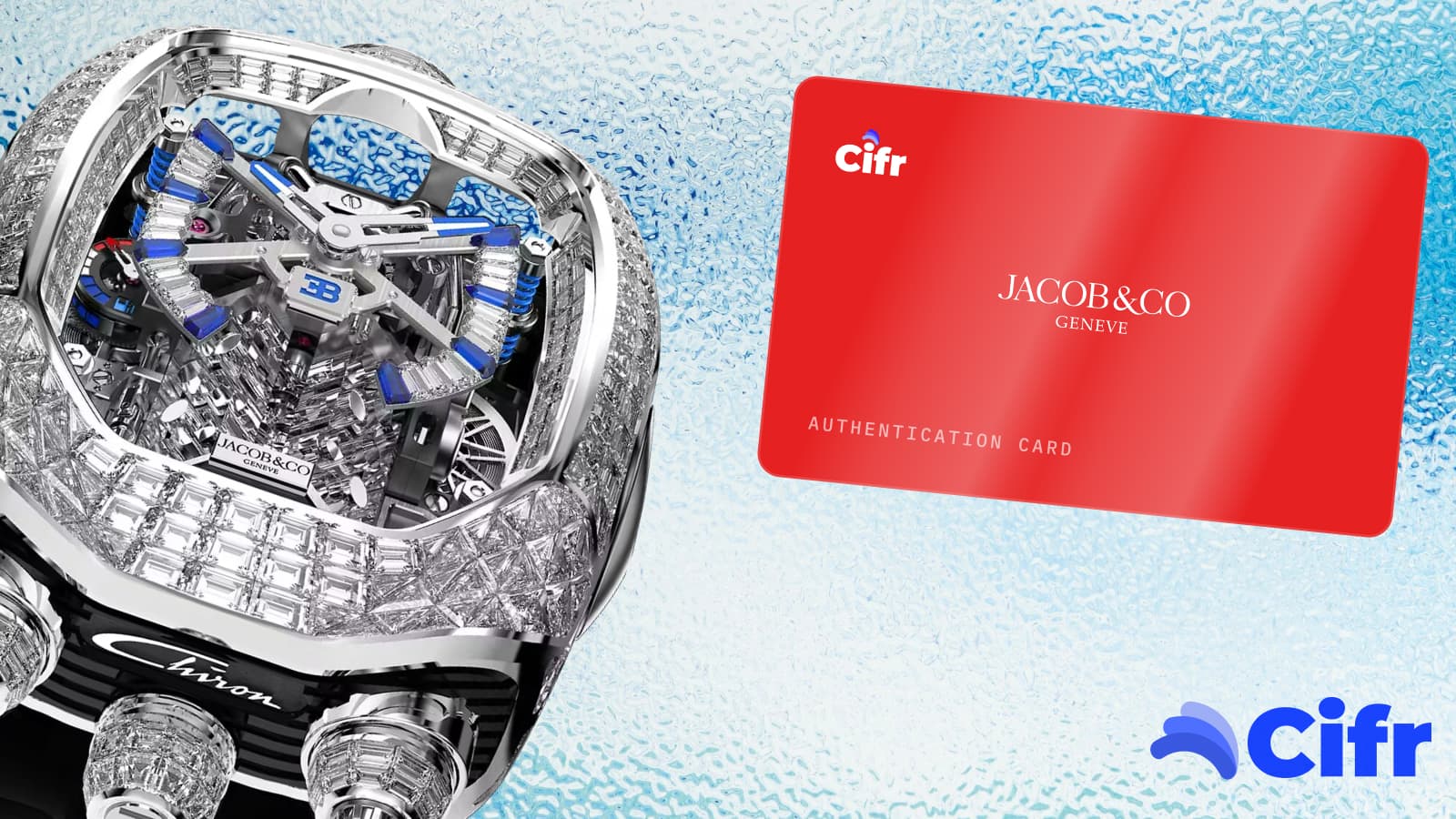
The service network produces the single piece of evidence that most determines a timepiece’s long-term value — and produces it as paper. Whether a dial is original, how many times a case has been polished, which components were replaced in 2019: these facts set the price of a watch decades later, and they currently live in folders, workshop systems and the memory of individual watchmakers.
The operational symptoms are familiar to anyone who runs an aftersales function:
- Warranty validity is a manual lookup, often against a card the client may not have.
- Replaced parts are frequently not itemised, so originality becomes unprovable later.
- Records are separable from the watch, so a lost folder is indistinguishable from a concealed history.
- Independent servicing is invisible, leaving gaps nobody can close.
Why this is a value problem, not a filing problem
Originality drives price in the pre-owned market more than almost any other factor. A piece with its original dial, hands and unpolished case commands a premium over the same reference that has been refinished — and the only authority on which is which is the service record.
When that record is incomplete, the market does what it always does with uncertainty: it discounts. A piece whose service history cannot be verified trades below a comparable one that can, which feeds directly into residual values and, through them, into the pricing power of the reference when new.
So the folder in the workshop is not administrative overhead. It is the asset’s value documentation, and it is being produced in the least durable format available.
What it costs the network day to day
Warranty verification time. Every intake begins with establishing whether the piece is in warranty, who sold it, and whether the client is the registered owner. On a grey-market or pre-owned piece this is frequently unresolvable and the workshop absorbs the ambiguity.
Authentication burden. Workshops are the de facto authentication layer for the whole market. Identifying a super-clone or a hybrid is skilled manual work, performed per piece, usually unbilled.
Reconciliation. Parts consumed, warranty claims and client records sit in separate systems and are matched by hand.
Disputes. Without an itemised, tamper-evident record, disagreements about what was replaced and when come down to competing recollections.
[Visual · Timeline] One piece across twelve years of service — paper records versus a signed, itemised ledger.
What changes when the piece checks itself in
A secure element bound to the timepiece and its authentication card means the watch carries a verifiable identity that no paperwork can be separated from. The private key is generated on-chip and cannot be exported, so the record cannot be moved to another object or fabricated for one.
For the service network, that turns intake into a single action. As the platform describes it: workshops check in a piece by tapping it, and the ledger updates itself.
What the tap resolves at intake
Authenticity, conclusively, before any bench time is spent. The chip signs a fresh random challenge; a clone cannot, so it is rejected immediately rather than after an hour of inspection.
Calibre integrity. The Caliber Blueprint records the exact movement specification for that piece matched to the manufacture record, which exposes a swapped or cloned calibre directly — the hybrid case that defeats visual inspection.
Warranty status, read from the Genesis Record rather than looked up from a card the client may have lost.
Ownership, so the workshop knows whether the person presenting the piece is its registered holder — which is also where a stolen piece with a locked passport surfaces.
Prior history, in order, so the watchmaker sees what was done and what was replaced before touching the movement.
What the tap writes back
Each intervention is recorded immutably as part of the Certified Service History: master watchmaker sign-offs, pressure checks and replaced parts, in sequence. Two properties matter commercially.
It is itemised. Replaced components are recorded individually, so originality is a readable fact rather than an inference from a summary invoice.
It is bound to the watch. The history travels with the object through every resale. It cannot be lost in a move, separated from the piece, or quietly curated before a sale.
Paper records versus a signed ledger
| Paper service records | Workshop system of record | Chip-bound service ledger | |
|---|---|---|---|
| Survives a lost folder | No | Yes, if the client returns | Yes |
| Travels with the watch on resale | Only if retained | No | Yes |
| Itemises replaced parts | Sometimes | Usually | Yes, always |
| Verifiable by a future buyer | No | No | Yes, one tap |
| Covers independent servicing | No | No | Yes, if the workshop taps |
| Authenticates the piece at intake | No | No | Yes |
| Resolves warranty without a card | No | Partly | Yes |
| Tamper-evident | No | Editable | Yes |
Rolling it out through a network
Start at intake, not at the bench. The tap replaces the warranty lookup and the authentication judgement, which is where the time is lost. Nothing about the watchmaking changes.
Train on exceptions, not on the happy path. The cases that matter are the clone, the hybrid, the locked passport and the unregistered holder. The tap makes each of these explicit rather than a judgement call, which is a meaningful reduction in individual liability for the watchmaker.
Include independent workshops deliberately. A network that only records authorised service leaves exactly the gaps the market discounts for. Independents that check pieces in add coverage and gain a credential their clients value.
Let the ledger drive the client relationship. Service check-in identifies the current owner, which for most pieces is the only reliable way a brand learns who is actually wearing its product.
Frequently asked questions
Does this replace our workshop management system? No. It supplies a verified identity and an immutable record alongside it; the operational system keeps doing scheduling, parts and billing.
What if a watchmaker forgets to tap? The gap is visible as a gap, which is already better than a paper record where absence and omission look identical.
Can a workshop falsify an entry? Entries are signed, so they are attributable. An entry cannot be written for a piece that is not physically present and tapped.
How does this handle pieces serviced before the system existed? Prior history is carried in as a recorded migration, clearly marked as such, rather than presented as independently verified.
Does it help with parts traceability? Replaced parts are itemised per intervention, which is the foundation originality claims currently lack.
Turn the folder into an asset
The service network already produces the evidence that sets your pieces’ value. It should not be producing it on paper.
Schedule an enterprise demo to see service check-in and warranty resolution against your own workflow, or read the luxury watch authentication guide.
Filed under
- service network
- warranty
- aftersales
- luxury watches
- operations
- enterprise